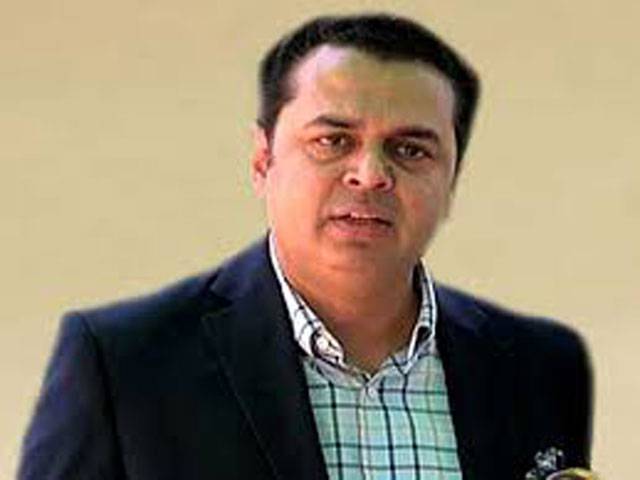


ISLAMABAD, Feb 3: Federal Minister for Planning, Development and Special Initiatives, Professor Ahsan Iqbal, has emphasized the need to promote a fact-based national narrative. He urged the business community to develop global brands, transform districts into export centers, and serve as ambassadors of ‘Brand Pakistan.’
Speaking at the launch of Pakistan’s first indigenous Index of Transparency and Accountability (iTAP), initiated by the Federation of Pakistan Chambers of Commerce and Industry (FPCCI) in partnership with Ipsos at the FPCCI Capital House, Ahsan Iqbal highlighted the importance of transparency and accountability.
The ceremony was attended by representatives from the public and private sectors, civil society, academia, and media. FPCCI President Atif Ikram Sheikh and Chairman Policy Advisory Board FPCCI Mian Zahid Hussain also addressed the gathering.
The iTAP initiative, conceived in May 2025, aims to provide a recurring benchmark for measuring transparency, accountability, and public trust in government and institutions. A field survey was conducted between December 2025 and January 2026 to obtain contemporary and nationally representative insights.
Organizers noted that the findings established a credible reform baseline. Despite negative perceptions, a majority of citizen interactions with public institutions were reported as corruption-free. This underscores the need for better awareness and communication of institutional improvements to boost governance and investment.
During his address, the minister highlighted the difference between perceptions of corruption and ground realities. He stated, “Negative narratives about the country must be replaced with facts and data.” He warned that repeated negative rhetoric for political purposes harmed national confidence, discouraged investment, increased business costs, and adversely affected exports.
Ahsan Iqbal congratulated FPCCI for prioritizing transparency and accountability in national dialogue, stating that these principles are crucial for good governance, citizen satisfaction, investor confidence, a business-friendly environment, and sustainable development. He noted that consistent tracking of iTAP could be a powerful tool for monitoring and reform, emphasizing that measurable performance leads to improvement.
“No country is completely free of corruption; the difference lies in its level, response, and perception,” he said, adding that Pakistan is a normal state with challenges as well as immense potential and talent.
The minister cited international assessments from the IMF, World Bank, Asian Development Bank, Fitch, and Moody’s, which recognized Pakistan’s recent economic improvements, overshadowed by domestic pessimism.
He praised FPCCI’s efforts and encouraged the business community to focus on building brands and value chains, asserting that “nations sell brands before they sell products. Trust in quality begins with trust in the country.” He advocated for turning districts into export hubs by leveraging local strengths and acknowledged Pakistan’s cultural and geographic diversity as core economic assets.
Finally, he urged entrepreneurs to adopt a high-performance mindset, stressing that consistent leadership, confidence, and continuity are vital for national development and global competitiveness.