


PESHAWAR, Feb 01: For 35-year-old Tariq Qadar, this spring season has arrived not only with blossoms but also with a thriving business opportunity for plant sellers.
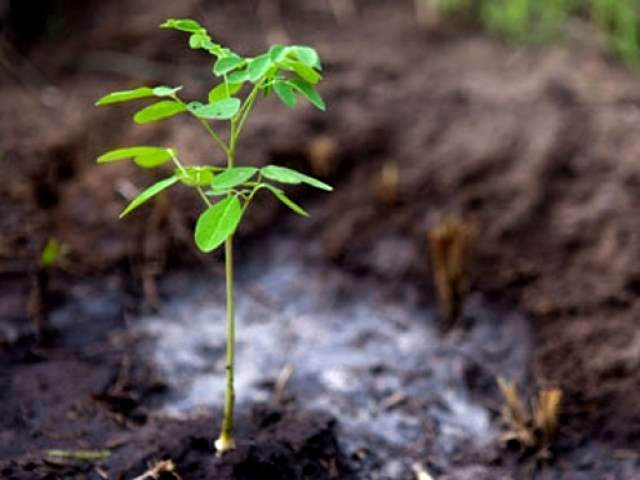
Beside a truck stacked high with saplings in Tarnab, a renowned plants hub on the outskirts of Peshawar, Tariq watches as laborers unload poplar, eucalyptus, and pine trees intended for farms, schools, and government offices across Khyber Pakhtunkhwa. This spring plantation campaign provides hope and opportunity for thousands in the plant business.
“Orders are coming from government departments, NGOs, educational institutions, and village development committees,” said Tariq with a smile. “This spring has been exceptional.”
Tariq sources his plants from Patoki in the Kasur district and has already brought in three truckloads of saplings, with more expected if demand continues to grow. Alongside traditional forest species such as poplar, shisham, and eucalyptus, ornamental plants like araucaria, bottle palm, and gangi palm are also seeing increased popularity.
“Our main customers are the Forest Department and educational institutions because they offer better profit margins and larger volumes,” Tariq explained.
Despite the booming business, however, there is a risk; if the plants die or go unsold, farmers suffer financially. About 10,000 people are associated with the plant business in Tarnab, Peshawar. Tariq has called on the Chief Minister of Khyber Pakhtunkhwa to provide support through interest-free loans for plant sellers.
Among Tariq’s customers is Malyar Khan, a farmer from Mohib Banda in the Nowshera district, who visited Tarnab to purchase poplar saplings. “These trees will protect my agricultural land from floods,” Malyar Khan said. “They help prevent soil erosion, improve the environment, and increase the value of our land.”
For many farmers in the province, tree plantation is more than an environmental duty; it is an economic investment and a means to strengthen resilience against climate-induced disasters.
Forests at the Frontline of Climate Defense
Forests play a critical role in maintaining ecological balance, regulating local climates, and mitigating the impacts of climate change. Acting as carbon sinks, they reduce greenhouse gases, stabilize water cycles, prevent erosion, and provide habitats for wildlife.
The Khyber Pakhtunkhwa Forest Department has launched a robust spring afforestation strategy aimed at expanding forest cover, converting non-productive land into green assets. From the plains of Khyber to the mountains of Kohistan and from Waziristan to Chitral, the Plant for Pakistan campaign is being implemented province-wide.
Farmers, students, local communities, and forest officials are being mobilized to plant diverse tree species to fight deforestation and desertification. Thousands of saplings will be planted in schools, colleges, universities, and community spaces, instilling environmental responsibility in younger generations.
Ahmad Jalil, Chief Conservator of Forests, Khyber Pakhtunkhwa, mentioned that the spring plantation drive focuses on farm forestry, mass plantation, and rehabilitation of degraded forest areas. “Our goal is to restore significant land tracts and strengthen KP’s resilience against climate change,” he stated.
Pakistan, particularly Khyber Pakhtunkhwa and Gilgit-Baltistan, faces an alarming rate of forest depletion, losing approximately 27,000 hectares of forest annually, mainly on private and community lands. Pakistan is among the top ten countries most vulnerable to climate change, as illustrated by the devastating floods and erratic weather patterns in 2022. Deforestation and air pollution are major contributing factors.
From Billion Trees to 10 Billion Trees
In response, the KP government launched the Billion Trees Afforestation Project (BTAP) in 2014 under the Green Growth Initiative, later expanded to the 10 Billion Trees Afforestation Project (10BTAP). Under 10BTAP, 711.35 million saplings of various species have been planted in KP through farm forestry, enclosures, and other interventions. Now, 26.7 percent of the province’s land area is covered in forests, surpassing international benchmarks. KP contributes 37 percent of Pakistan’s total forest cover, absorbing nearly 50 percent of the country’s carbon emissions.
Beyond environmental benefits, the initiative has created over 200,000 green jobs, while the province’s carbon credits are estimated to be worth Rs. 100 billion annually.
Green Growth and the Road Ahead
Large-scale irrigation and plantation projects, such as the Chashma Right Bank Canal project and the Mohmand Dam Canal, aim to significantly boost agricultural productivity by bringing hundreds of thousands of barren acres under cultivation. Experts emphasize that combating climate change requires collective action. The Plant for Pakistan initiative represents a long-term, sustainable approach to environmental protection, economic growth, and climate resilience.
As spring unfolds across the province, officials urge citizens to plant as many trees as possible to improve air quality, restore rainfall patterns, and safeguard future generations. Chief Conservator Ahmad Jalil encourages farmers and citizens to approach Forest Department Offices in their respective districts for saplings.
For Tariq Qadar and many others in this climate-critical province, the message is clear: every tree planted today is an investment in tomorrow.