

During a UN Security Council meeting held under the Arria-Formula format, speakers highlighted the importance of honoring international agreements, a principle known as ‘pacta sunt servanda’, to preserve global stability and adhere to international law. Pakistan specifically addressed India’s unilateral decision to halt the 1960 Indus Waters Treaty (IWT) with Pakistan.
The meeting, attended by 15 UN member countries and convened by Pakistan, underscored the binding nature of treaties under international law, a move recognized as timely and significant in today’s complex political landscape.
The Arria-Formula meetings, named after a former Venezuelan UN ambassador, are informal gatherings that allow Security Council members to candidly discuss vital issues.
The focus of Friday’s meeting was titled “Upholding the Sanctity of Treaties for the Maintenance of International Peace and Security”.
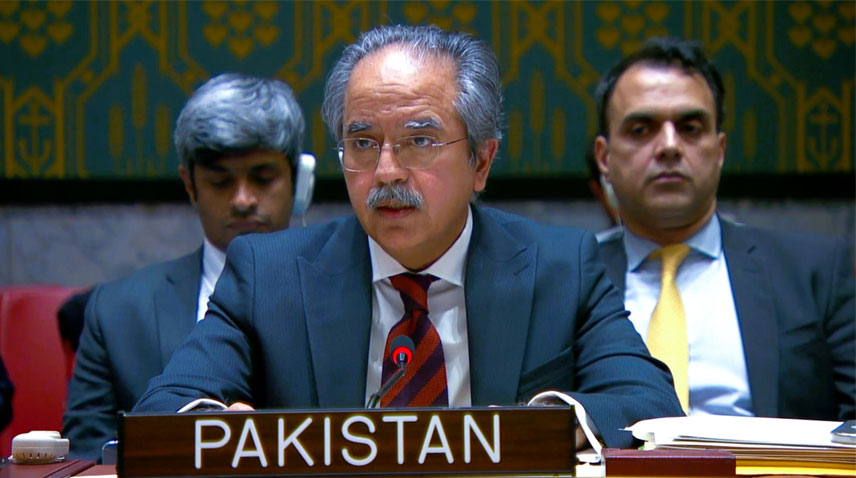
Pakistan’s UN Ambassador Asim Iftikhar Ahmad chaired the meeting, which included participation from more than 40 delegations and experts.
In his opening remarks, the Pakistani envoy stressed, “Treaties are not ceremonial texts; they are the operating system of peaceful international relations.” He warned of real and immediate risks posed by unilateral actions impacting water flows in downstream areas.
Highlighting the persistent principles of the International Court of Justice, Asim Ahmad stressed that disputes require resolutions through agreed legal frameworks, not unilateral acts altering the rights and obligations balance.
He expressed concern over a “worrying pattern” where treaty commitments are increasingly subject to selective interpretation, delays, or suspensions, leading to legal uncertainties and escalations in regional tensions.
About the Indus Waters Treaty, Ambassador Ahmad proclaimed it one of the most robust water-sharing agreements globally, resilient despite historic wars and tensions between India and Pakistan.
The unilateral action by India impacts the confidence-building framework in the nuclearized region, jeopardizing the resource management crucial for millions in Pakistan. Any disruption has humanitarian and security implications for over 250 million downstream residents in Pakistan.
Ambassador Ahmad pointed to a 2025 Court of Arbitration decision affirming the ongoing validity of IWT and its dispute-resolution mechanisms, prohibiting any unilateral suspension or inoperation of the treaty.
He emphasized the critical role of the UN, especially the Security Council, in preventing crises by upholding legal frameworks that avert conflicts.
In conclusion, he declared, “Let our message today be clear and collective: Treaties must not become casualties of geopolitics. They must remain anchors of restraint, pathways of cooperation, and safeguards for peace.”