
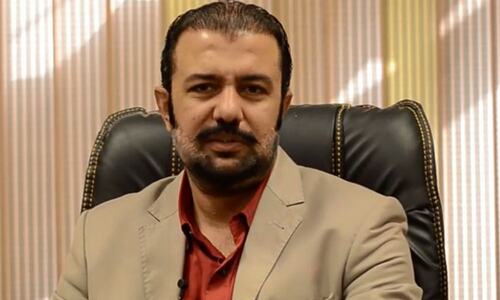

ISLAMABAD, Jan 29: Adviser to the Finance Minister, Khurram Schehzad, shared that Pakistan has, for the first time in its history, begun repaying domestic debt ahead of maturity at an unprecedented scale. This move signifies a decisive shift towards fiscal discipline and responsible economic management.
Since late 2024, the Ministry of Finance has early-retired Rs3,654 billion in domestic debt owed to the market and the State Bank of Pakistan (SBP) over just 14 months. The latest repayment of Rs300 billion was made to the SBP on Thursday.
Khurram Schehzad highlighted that this landmark achievement demonstrates a strong commitment to fiscal discipline, boosting the country’s economic credibility.
The early repayments included Rs1,000 billion in December 2024, Rs500 billion in June 2025, Rs1,160 billion in August 2025, Rs200 billion in October 2025, Rs494 billion in December 2025, and Rs300 billion in January 2026.
For FY2026 (July–January), early debt retirement exceeded Rs2,150 billion, which is 44% higher than the total early repayments in FY2025.
Schehzad noted that nearly 44% of the SBP-held debt was retired early, reducing the central bank debt stock significantly. Of the total early repayments, 65% pertained to SBP debt, 30% to treasury bills, and 5% to Pakistan Investment Bonds, offering a more sustainable debt profile.
Moreover, public debt declined from over Rs80.5 trillion in June 2025 to approximately Rs80 trillion by November 2025, while the debt-to-GDP ratio improved from about 74% in FY2022 to nearly 70%.
He remarked that common narratives often misrepresent per-capita debt figures, as they do not truly reflect a country’s debt burden. Many advanced economies maintain some of the highest per-capita debt levels yet stay fiscally stable due to strong revenue bases and effective debt management.
Key indicators to evaluate debt burden include the debt-to-GDP ratio, revenue and repayment capacity, interest cost savings, maturity profile, rollover risks, and savings achieved through early repayments and reduced borrowing costs.
These improvements have helped lower future obligations and fiscal risks, reduced the economic burden, and created opportunities for growth and social spending.
Pakistan’s recent debt management measures have diminished refinancing risks, cut borrowing costs by switching to cheaper instruments, and expanded fiscal room for development expenditure.
The strengthened fiscal resilience is evident, as the average domestic debt maturity has improved from 2.7 years in FY2024 to over 4.0 years, marking a record single-year improvement.
Disciplined debt management has resulted in substantial taxpayer savings, with over Rs850 billion saved during FY2025 and a further Rs800 billion expected in FY2026 due to debt switches and stable interest rates.
Schehzad emphasized that this shift from excessive borrowing to repayment and risk reduction represents a structural change in fiscal management, contributing to restored economic credibility and stronger long-term financial stability.