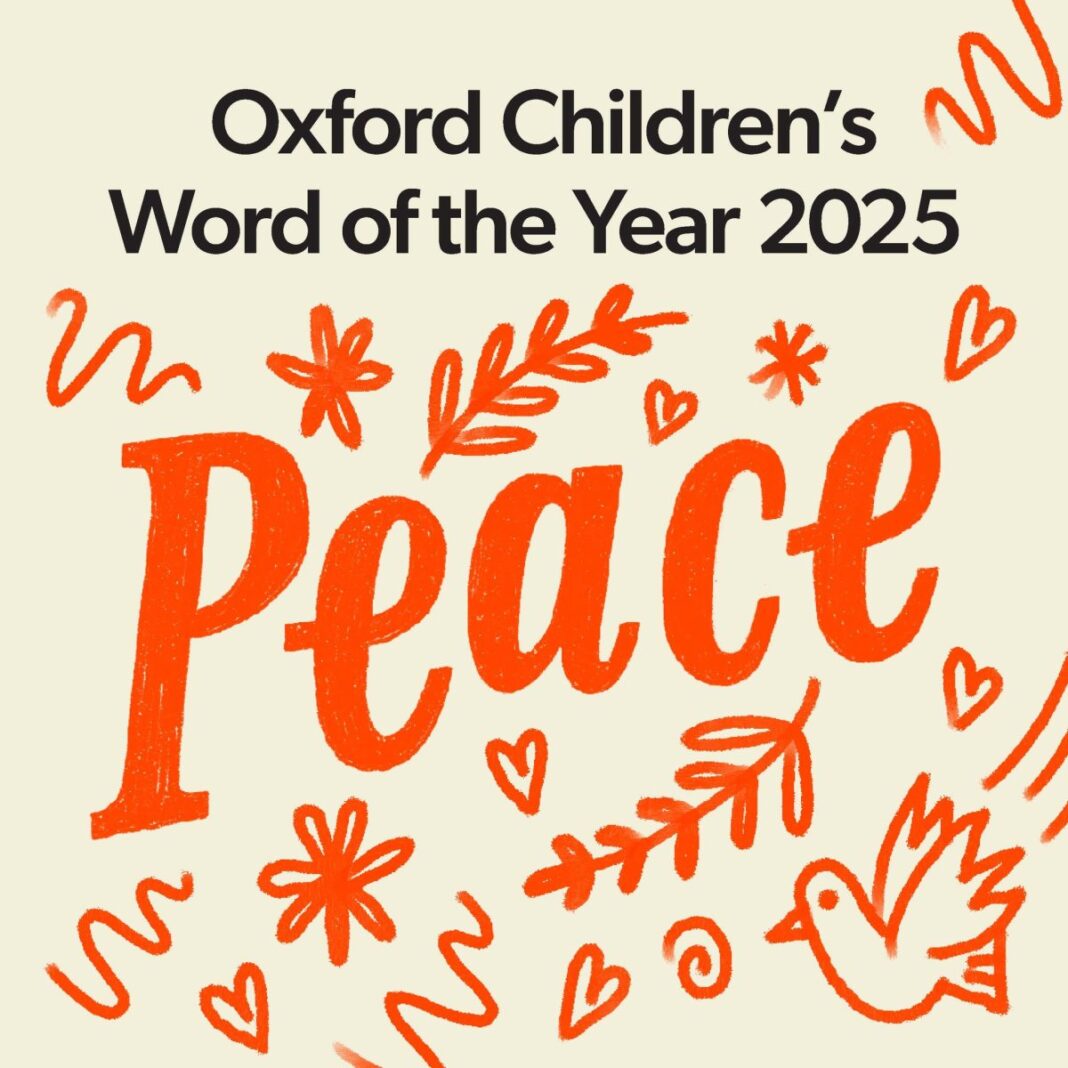

ISLAMABAD, Jan 28: Oxford University Press (OUP) has announced that ‘Peace’ is Oxford Children’s Word of the Year for 2025. This decision emerged from a survey conducted with nearly 5,000 children aged 6–14 across the UK, where 35 percent chose peace. This was closely followed by 33 percent selecting AI and 21 percent opting for resilience.
The 2025 research highlighted children’s awareness of current issues, with one in ten respondents mentioning ‘war’ as a reason for their choice and referencing conflicts like those in Ukraine and Gaza. Words such as ‘need,’ ‘want,’ and ‘should’ were commonly used by children calling for global peace.
Analysis of the Oxford Children’s Corpus, the world’s largest database of children’s English writing, revealed a 60 percent increase in mentions of peace in children’s stories submitted to the BBC 500 Words competition since 2015.
For the second year running, AI was the runner-up, with 20 percent of children mentioning exposure to AI discussions, noting its integration into daily life. The survey also cited positive feelings toward AI, with over 10 percent of responses describing it as ‘exciting.’ AI was notably popular among younger children, with 29 percent of those aged six to eight choosing it as their word of the year.
In terms of slang, 47 percent of children selected ‘six-seven’ as the slang word of the year, followed by ‘aura’ (24 percent) and ‘delulu’ (7 percent). The study found that the use of ‘six-seven’ promotes inclusivity and social connections, with nearly ten percent associating it with friends and about 28 percent linking it with fun and laughter. Although 12 percent of children perceived six-seven as meaningless, 72 percent valued having exclusive communication with friends.
OUP is encouraging schools to participate in the next Oxford Children’s Word of the Year initiative to boost children’s reading, vocabulary, and oracy skills. Schools are urged to host ‘word of the year’ conversations throughout the academic year and vote on their 2026 word choice. OUP has created an activity pack to assist in these conversations, aiming to enhance book discussions and language development.
Marking the occasion, and to commemorate the National Year of Reading 2026, OUP will collaborate with the National Literacy Trust on various school events in the UK. These author-led events will engage children with different reading forms, encouraging reflection on the words they encounter.
Andrea Quincey, OUP’s Director of Early Years and Primary Publishing, stated, “Our research shows how attuned children are to current affairs. Whether it’s calling for peace amidst conflicts or highlighting AI’s daily impact, their awareness is evident.” Quincey also emphasized the popularity of ‘six-seven’ as a slang word, attributing its appeal to the joy and connection it provides amongst peers.
Meanwhile, Jonathan Douglas CBE, Chief Executive of the National Literacy Trust, commented on the vital role language plays in shaping society and identity. Through the National Year of Reading initiative, the aim is to offer children engaging and relevant experiences with language, fostering connections with others.
For over a decade, OUP experts and researchers have tracked the evolution of children’s language through the Children’s Word of the Year project. The Oxford Children’s Word of the Year 2025 report, showcasing the latest findings, was published on January 21, 2026.