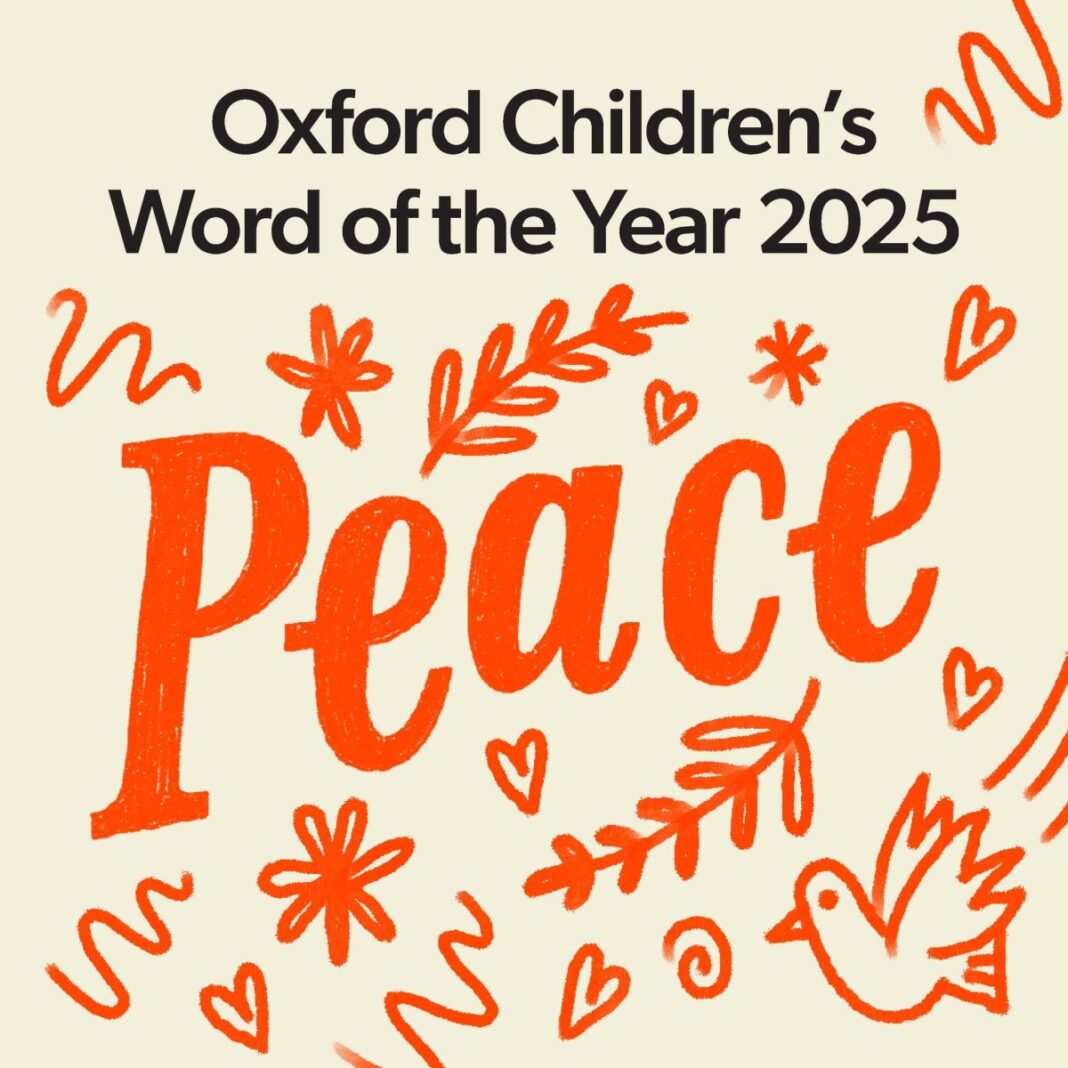

ISLAMABAD, Jan 28: Oxford University Press (OUP) has announced that ‘Peace’ is the Children’s Word of the Year for 2025, as determined by a study in which 35% of children selected this word. This was closely followed by 33% choosing ‘AI’, and 21% opting for ‘resilience’.
This research, conducted in 2025, gathered insights from nearly 5,000 children aged 6–14 across the UK, showcasing their awareness of contemporary issues. According to a press release, 10% of these children mentioned ‘war’ as a reason for choosing peace, specifically pointing out conflicts like ‘Ukraine’ and ‘Gaza’.
Children frequently used the words ‘need’, ‘want’, and ‘should’ when discussing their desire for world peace. An analysis of the Oxford Children’s Corpus, which is the largest database of kids’ writing in English, has shown a 60% increase in mentions of peace in children’s narratives submitted to the BBC 500 Words competition since 2015.
For the second year in a row, AI ranked as the second choice. A fifth of the children (20%) who selected AI said they hear about it often, emphasizing its pervasive presence in daily life. Many described the concept with enthusiasm, with over 10% feeling ‘excited’ about AI. Notably, more than 29% of children aged 6 to 8 chose AI as their word of 2025, reflecting their awareness of its role in everyday activities.
‘Six-seven’ emerged as the slang word of the year for nearly half (47%) of the children, with ‘aura’ chosen by 24% and ‘delulu’ by 7%. The research indicated that ‘six-seven’ fosters inclusivity and social awareness, with about 10% associating it with friendship, while 28% linked it with ‘fun’ and ‘laughter’.
While 12% claimed that ‘six-seven’ had no meaning, the majority emphasized the importance of colloquial terms shared amongst friends, with 72% agreeing on the significance of such words for peer interactions.
OUP is inviting schools to join the next Word of the Year initiative to enhance students’ reading, vocabulary, and communication skills. The OUP has prepared a resource pack to assist schools in these efforts, including tips on fostering discussions about words and language.
To highlight the announcement and support the National Year of Reading 2026, OUP is collaborating with the National Literacy Trust on school events across the UK. These events, led by authors, aim to inspire children to engage with varied reading experiences and reflect on language.
Andrea Quincey, Director of Early Years and Primary Publishing at OUP, observed, “Our research demonstrated that children are keenly aware of current issues. This year, their engagement ranges from advocating for peace to noting AI’s impact on everyday life. It’s also noteworthy that ‘six-seven’ was overwhelmingly selected as their slang word, a term that brings joy and connection among peers.”
Quincey emphasized the importance of schools’ participation in future research to capture a wide array of children’s language, including regional expressions, to support vocabulary development and self-expression.
Jonathan Douglas CBE, CEO of the National Literacy Trust, asserted, “Language profoundly shapes society, culture, and identity. Our efforts in the National Year of Reading aim to provide children with enjoyable and meaningful language experiences, fostering connections with others.”
In collaboration with OUP and notable authors, the initiative seeks to bring the joy of words and reading to young people across the UK.
For over a decade, OUP experts have meticulously tracked the Children’s Word of the Year, analyzing language evolution and its reflection of emotions and experiences among children. The latest findings are detailed in the Oxford Children’s Word of the Year 2025 report, published on January 21, 2026.