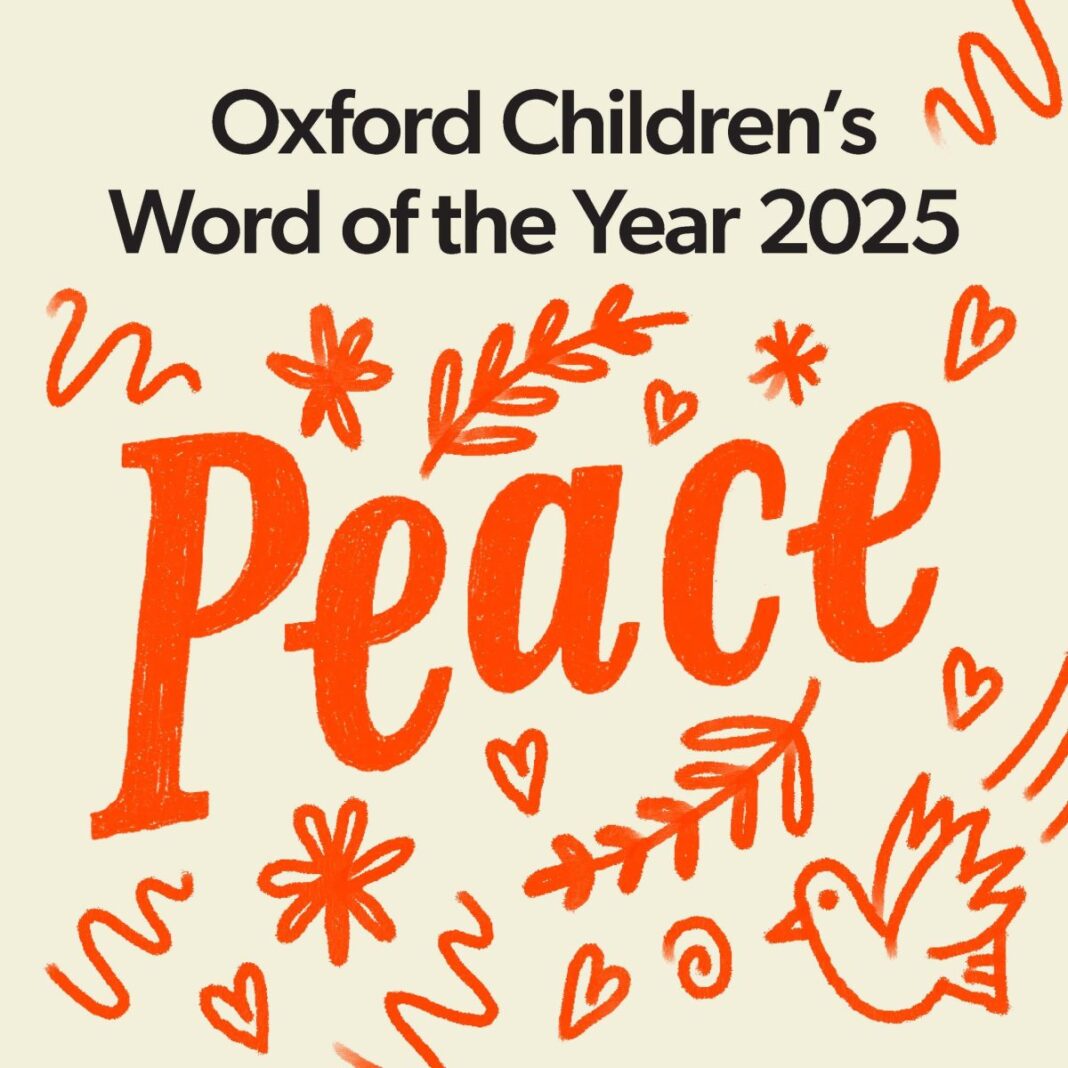

ISLAMABAD, Jan 28: Oxford Children’s Word of the Year for 2025 has been declared as ‘Peace,’ according to research by Oxford University Press (OUP). Thirty-five percent of children selected peace, narrowly followed by AI (33 percent) and resilience (21 percent).
The research, conducted in 2025, surveyed nearly 5,000 children aged 6-14 across the UK, highlighting their awareness of current events. A press release noted that one in ten children mentioned ‘war’ when selecting peace, referencing specific conflicts such as those in Ukraine and Gaza.
Common words like ‘need,’ ‘want,’ and ‘should’ frequently appeared in their responses advocating for worldwide peace. An examination of the Oxford Children’s Corpus revealed a 60 percent increase in mentions of peace in children’s stories submitted to the BBC 500 Words competition since 2015.
For the second year in a row, AI was the runner-up, with one-fifth of the children citing frequent discussions about AI in daily life. Children often responded positively, with more than one in ten describing the term AI as ‘exciting.’ Additionally, 29 percent of children aged six to eight chose AI as their word of the year.
Children also showed a preference for slang, with 47 percent selecting ‘six-seven’ as their slang word of the year, followed by ‘aura’ (24 percent) and ‘delulu’ (7 percent). Research indicated that ‘six-seven’ promotes inclusivity, with many children associating it with friends and fun.
OUP encourages schools to participate in the next Oxford Children’s Word of the Year to further enhance children’s reading, vocabulary, and oracy skills. Schools are advised to hold discussions throughout the school year and choose their word for 2026. An accompanying activity pack with resources and tips for participation is available to support these initiatives.
To celebrate the announcement and support the National Year of Reading 2026, OUP will collaborate with the National Literacy Trust on school events across the UK. These author-led events will inspire children to engage with various forms of reading and reflect on language use.
Andrea Quincey, Director of Early Years and Primary Publishing at Oxford University Press, remarked on children’s awareness of current affairs, whether advocating for peace or acknowledging AI’s influence. She emphasized the importance of children having language agency and highlighted the significance of continuing children’s language research.
Jonathan Douglas CBE, Chief Executive of the National Literacy Trust, commented on the role of language in society and identity. He noted that the National Year of Reading will present children with opportunities to explore language in meaningful and enjoyable ways, fostering connections with others.
For over a decade, OUP experts have tracked the evolution of children’s language and its reflection of their emotions and experiences. The Oxford Children’s Word of the Year 2025 report was published on January 21, 2026.