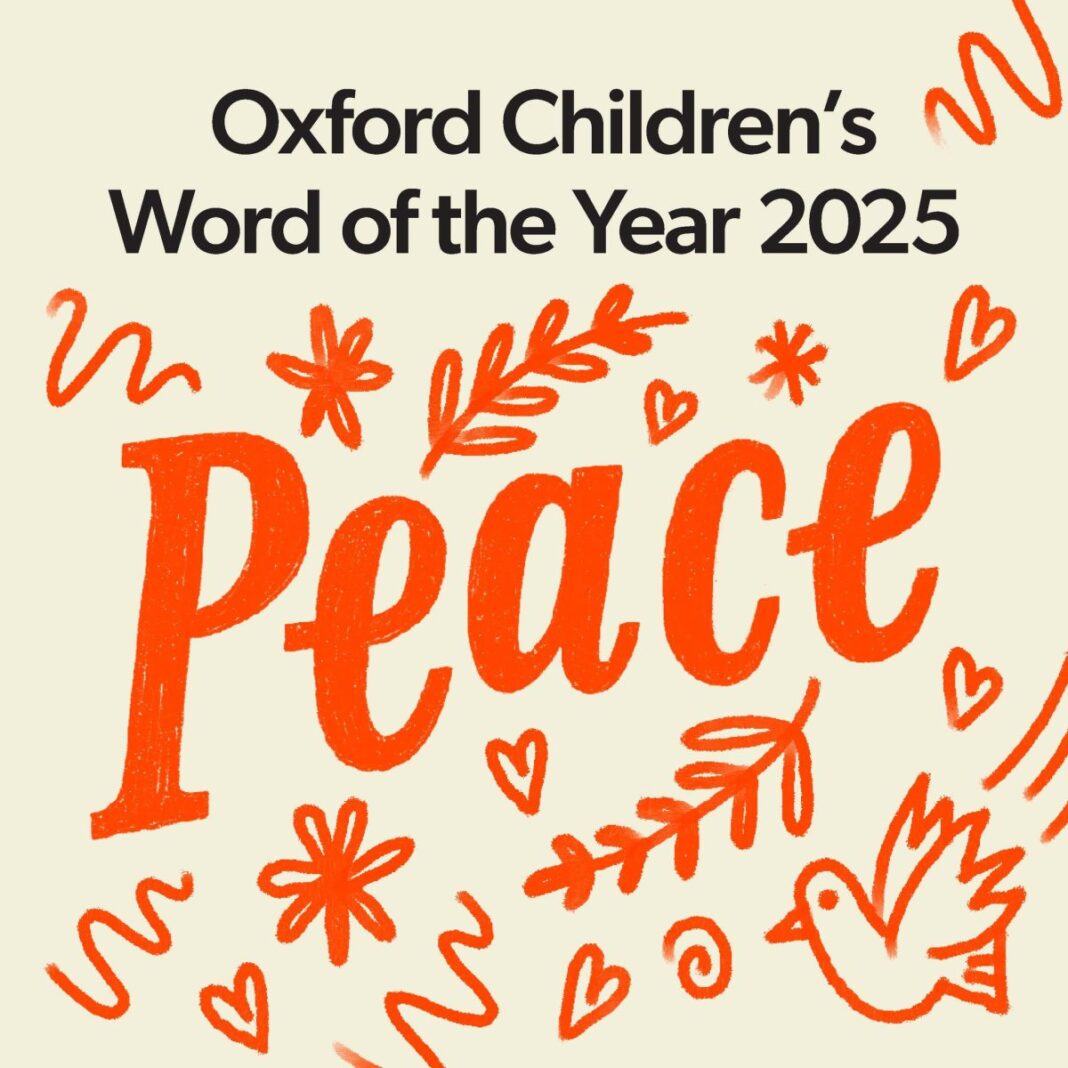

ISLAMABAD, Jan 28: Peace has been chosen as Oxford Children’s Word of the Year for 2025, according to research conducted by Oxford University Press (OUP). A total of 35 percent of children selected peace, with AI following closely at 33 percent, and resilience chosen by 21 percent.
The research, conducted in 2025, surveyed almost 5,000 children aged 6–14 across the UK, highlighting their awareness of current affairs. According to a press release, one in ten children referred to ‘war’ when explaining their choice of peace, citing specific conflicts like ‘Ukraine’ and ‘Gaza’.
Children frequently used words such as ‘need’, ‘want’, and ‘should’ when advocating for peace globally. A study of the Oxford Children’s Corpus, the largest database of writing by and for children in the English language, containing over half a billion words, shows that mentions of peace in children’s stories submitted to the BBC 500 Words competition have increased by 60 percent since 2015.
AI was selected as the runner-up for the second consecutive year. When questioned, one-fifth of children (20 percent) cited ‘hearing’ and ‘talking’ about AI, highlighting its prevalence in everyday life. Children responded positively, with more than one in ten describing AI as ‘exciting’. Notably, 29 percent of children aged 6-8 chose AI as their word of the year, demonstrating their awareness of its role in daily life.
Nearly half (47 percent) of children selected ‘six-seven’ as their slang word of the year, followed by ‘aura’ (24 percent) and ‘delulu’ (7 percent). Research indicated that terms like six-seven promote inclusivity, with approximately one in ten connecting it to ‘friends’ and many associating it with being ‘popular’. Over a quarter (28 percent) associated it with ‘fun’ and ‘laughter’.
While 12 percent of children admitted six-seven had no meaning, most valued such words, with 72 percent asserting the importance of having words exclusive to their friend groups.
OUP is inviting schools to join in the next Oxford Children’s Word of the Year to further support children’s reading, vocabulary, and oracy skills. Schools are encouraged to engage in ‘word of the year’ discussions continuously and vote for their 2026 word choice. OUP has prepared an activity pack with tips and resources for participation, including fostering discussions about books and language development. More information about downloading the pack and participation can be found here.
To celebrate the announcement and support the National Year of Reading 2026, OUP will be partnering with the National Literacy Trust on school events throughout the UK. These author-led events will encourage children to engage with diverse forms of reading and reflect on the words they read, hear, speak, and learn about.
Andrea Quincey, Director of Early Years and Primary Publishing at Oxford University Press, stated, “A key theme from our Oxford Children’s Word of the Year research is how attuned children are to current affairs. This year is no different, whether it’s calling for peace in response to conflicts or recognizing AI’s impact on daily life.
The popular slang ‘six-seven’, overwhelmingly voted as their favorite, brings laughter, joy, and connects friends. It underscores the importance for children to feel agency over their language, sharing words beyond adult comprehension.
For this reason, we encourage schools to partake in our research for 2026. We aim to gather more insights from children, including colloquial words and regional expressions. This year’s findings highlight the need for ongoing research into children’s language for supporting their vocabulary development and self-expression.”
Jonathan Douglas CBE, Chief Executive of the National Literacy Trust, commented, “Language profoundly shapes our society, culture, and identity. Understanding how children interpret the words they encounter daily, take ownership of them, and play with their meanings showcases language’s power in helping us understand our world and our place in it.
The National Year of Reading will offer new opportunities for children to experience language in fun, relevant ways, facilitating connections with others. Throughout the year, Oxford University Press and several outstanding authors will work together to bring the magic of reading and words to life for children across the UK.”
For more than a decade, experts and researchers at OUP have tracked the Children’s Word of the Year, analyzing how children’s language evolves to reflect their emotions and experiences. In response to the latest findings, the Children’s Language department at OUP has issued the Oxford Children’s Word of the Year 2025 report, available since January 21, 2026.